
Fibe Personal Loan Guide: Eligibility, Process & What to Know Before Applying
A practical breakdown of how Fibe's personal loan process works — eligibility, documentation, and what to check before you apply.
R
By RoshiniAffiliate disclosure: We may earn a commission from links on this page at no extra cost to you.
A practical breakdown of how Fibe's personal loan process works — eligibility, documentation, and what to check before you apply.
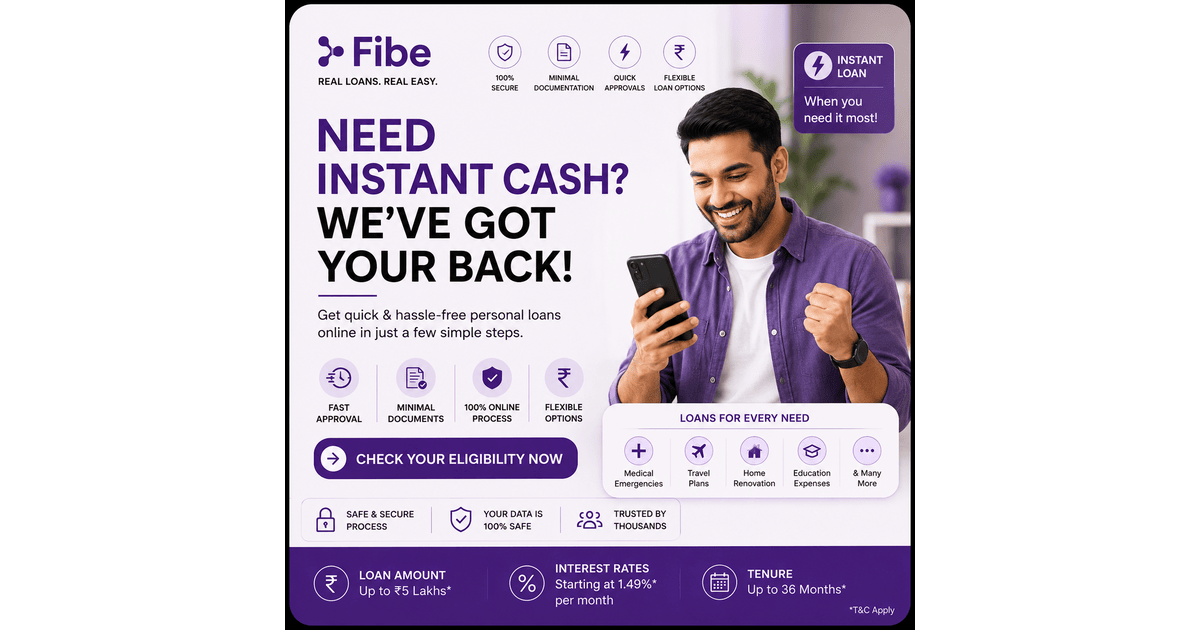
Unexpected expenses — a medical bill, a travel emergency, urgent home repairs — don't wait for a good time to show up. That's part of why digital lending platforms like Fibe have grown quickly in India, offering personal loans without the paperwork-heavy process traditional banks are known for. Here's a practical look at how it actually works.
Fibe is a digital lending platform offering personal loans through a fully online process — from eligibility check to disbursal — aimed at people who need quick access to funds without visiting a branch or submitting extensive physical documentation.
The typical application flow follows four broad steps:
Like most digital lenders, Fibe's eligibility criteria typically factor in:
A few things worth confirming before you commit to any digital personal loan, Fibe included:
Digital lending platforms often quote attractive headline rates — always check the total repayment amount (principal + interest + any processing fees) rather than just the monthly EMI figure in isolation.
Look for processing fees, foreclosure charges (if you want to repay early), and late payment penalties — these aren't always prominently displayed upfront.
Shorter tenures mean higher EMIs but lower total interest paid; longer tenures reduce monthly burden but increase total cost. Check what tenure options are actually available for your approved amount.
The fastest approval isn't always the cheapest loan. Before accepting an offer, compare the total repayment cost — not just how quickly the funds land in your account.
It's generally worth avoiding personal loans for discretionary spending or to cover recurring monthly shortfalls — in those cases, the underlying budget issue is worth addressing directly rather than bridging it with borrowed money.
Digital lenders like Fibe typically offer faster approval than traditional banks since the process is fully online, though exact timelines depend on your documentation and verification completing smoothly.
Checking eligibility usually involves a soft inquiry that doesn't affect your score, but a full loan application typically triggers a hard inquiry, which can have a minor, temporary impact on your credit score.
Most digital lenders require basic KYC documents (ID and address proof), income proof (salary slips or bank statements), and PAN details — verification is usually completed digitally.
Digital lending platforms like Fibe have made accessing quick funds significantly more convenient — but the same due diligence that applies to any loan still matters. Check the full cost, confirm your repayment capacity, and borrow only what you actually need.
About the author
Roshini
Roshini writes for Moneyme on Home Insurance, vetting offers and comparing providers so readers can choose with confidence.