
Our Little Joys Review: A Buying Guide to Their Baby & Kids Essentials
A practical look at Our Little Joys' baby and kids product range — what to check across feeding, care, toys, and travel essentials.
S
By ShaliniAffiliate disclosure: We may earn a commission from links on this page at no extra cost to you.
A practical look at Our Little Joys' baby and kids product range — what to check across feeding, care, toys, and travel essentials.
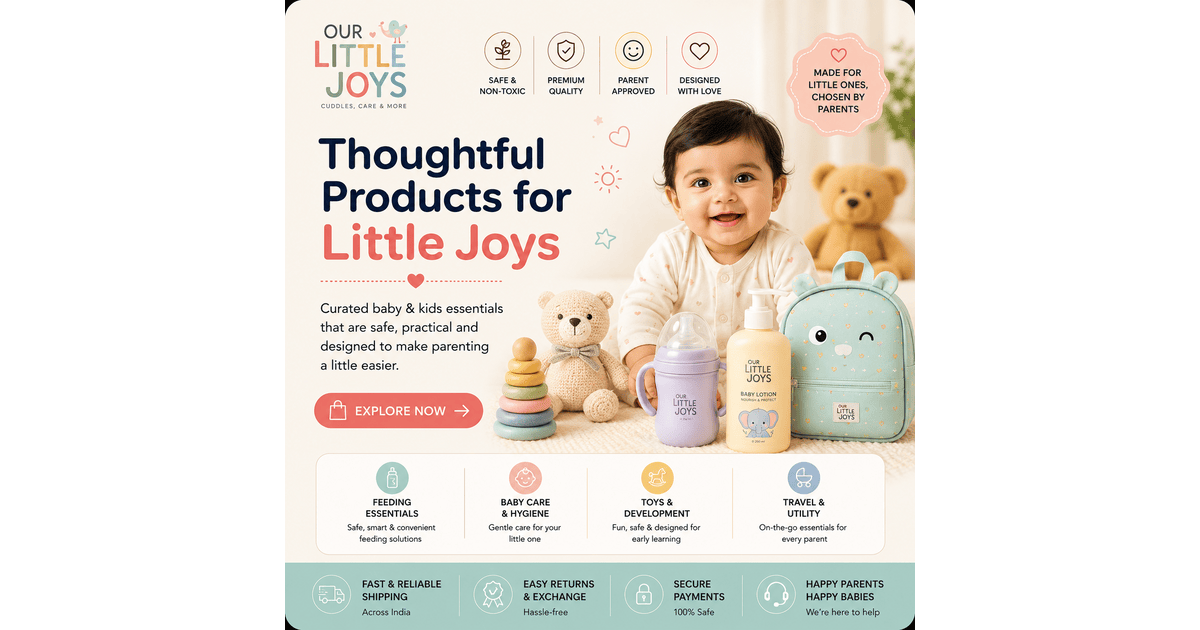
Every purchase decision feels a little higher-stakes when it's for a baby — material safety, practicality, and everyday usability all matter more than they would for an adult product. Our Little Joys positions itself as a curated platform for baby and kids essentials, aiming to simplify that decision-making. Here's what's worth knowing across their main product categories.
Baby product shopping comes with a wider margin for error than most categories — material safety standards, choking hazards, and age-appropriateness all need checking, on top of the usual price and quality comparisons. A curated platform's value is in doing some of that filtering upfront, though it's still worth knowing what to check yourself.
Feeding products see the most daily use of any baby category, so durability and material safety matter most here.
This category covers everything from skincare to bathing essentials, where ingredient sensitivity matters most.
Rather than shopping by what looks appealing, matching toys to developmental stage tends to get more actual use out of them.
Checking choking-hazard size warnings is essential across all age ranges, particularly for younger siblings' toys ending up in a baby's reach.
Travel gear often gets the least thought until it's actually needed — worth considering a few practical factors in advance:
The best baby product isn't always the most feature-packed one — it's the one that matches your child's current stage and your actual daily routine. Overbuying for "future use" often means the item sits unused until your child has already outgrown it.
Material safety (BPA-free, food-grade materials) and age-appropriate flow rates or sizing should come before design or brand preference.
Match toys to your child's current developmental stage rather than buying ahead — a toy that's too advanced often goes unused, while one that's too simple loses engagement quickly.
They can save research time by pre-filtering for safety and quality standards, though it's still worth independently checking material certifications and reviews for anything going directly on or near your baby.
Baby product shopping doesn't need to be complicated, but it does benefit from a few consistent checks — material safety, age-appropriateness, and genuine review feedback — regardless of which category or platform you're buying from.
About the author
Shalini
Shalini writes for Moneyme on Fashion, vetting offers and comparing providers so readers can choose with confidence.